

Rooted Here
In 2020, MLC began building trust with the Ute Mountain Ute Tribe (UMUT)(Opens in a new window), listening to Tribal priorities and exploring how our relationships with landowners could support renewed connections to ancestral homelands. Those conversations helped give rise to the Traditional Harvest Project (THP). Co-managed by MLC and Trees, Water & People (TWP) (Opens in a new window)in partnership with UMUT, the THP facilitates access to privately owned ancestral gathering areas so that Tribal members may harvest culturally significant plants used for food, medicine, craft, and ceremony—plants that are in dwindling supply on the UMUT reservation due to the effects of climate change and the risks of overharvesting. Participating landowners now collectively provide harvesting access to more than 8,000 acres across Southwest Colorado beyond the reservation boundaries.
Tending the land and our relationships
Each June, these relationships cultivated through the THP help enable the cottonwood harvest needed to build the arbor for the UMUT’s Bear Dance. Named for the reawakening of hibernating bears, the Bear Dance is the Tribe’s annual social dance that celebrates the arrival of spring. It is one of their largest community gatherings of the year. To support the ceremony, MLC helps locate suitable trees, arranges access with landowners, and coordinates crews and transportation while Tribal harvest leaders guide the work to harvest the cottonwoods and build the arbor using the gathered materials. UMUT is a sovereign nation. Responding to these community-defined needs means respecting Tribal authority and cultural protocols while providing practical support.
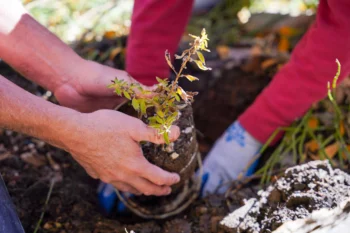
Ensuring the sustainability of future harvests also means caring for plant habitat. At the County Road 39 restoration site near Mancos, Colorado, MLC works with UMUT, TWP, Mountain Studies Institute(Opens in a new window), and participating landowners to restore habitat along the Mancos River using low-tech, process-based restoration techniques. Crews install post-assisted log structures (PALS) to slow water, encourage sediment deposition, and help reconnect the river with its natural floodplain. By increasing soil saturation, these structures can improve conditions for newly planted willows, cottonwood, and other culturally significant native species, supporting their survival in a changing climate. Tribal priorities guide the work, informed by Traditional Ecological Knowledge and western restoration science. Southwest Conservation Corps(Opens in a new window) and Ancestral Lands Conservation Corps(Opens in a new window) crews carry it forward through paid opportunities for Indigenous youth and young adults. The site serves as a living classroom, connecting restoration skills with learning about the plants and relationships that sustain cultural harvests.
Making room for return
The THP contributes to Indigenous land rematriation—the slow, intentional process of reconnecting Indigenous Peoples with their ancestral homelands and renewing the relationships and responsibilities rooted there. Tribal Nations and Indigenous communities define this work according to their own priorities. It can include a number of actions from the return of land, to restoring cultural access and strengthening Indigenous leadership in land management decisions. This work asks us to envision conservation in which ecological health and cultural continuity are understood together. This kincentric approach deepens that understanding by recognizing plants, animals, water, and land as relatives to whom we hold responsibilities.
MLC recognizes that conservation has played a role in Indigenous land dispossession and exclusion, but also believes that, when done better, it can help shape a different future. Through their relationships with private landowners, land trusts can create pathways to restore access, just as MLC is doing in Southwest Colorado. The THP’s inclusion in Partnerships for Indigenous Land Access and Return(Opens in a new window), a case study report developed by Native Land Conservancy(Opens in a new window) and the Land Trust Alliance(Opens in a new window), brings our experiences into a growing national body of knowledge. By sharing what we learn alongside our partners, MLC hopes to help other organizations develop meaningful efforts grounded in Tribal sovereignty and the needs of their own communities. Our commitment to lasting land protection calls us to sustain this work across landscapes and over generations.
This work does not happen alone
The THP continues because Tribal harvest leaders, landowners, crews, and partners invest their time and care. MLC is grateful to Osprey for supporting this work and sharing this story from Southwest Colorado, the place both call home. Sustained support makes the coordination behind this work possible and allows us to keep showing up as our Tribal partners identify what comes next.
On Indigenous Peoples Day, we invite you to carry your love of the outdoors into a deeper relationship with the places you visit. Learn about the Tribal Nations whose homelands you travel through and recreate on, listen to their present-day priorities, and support Indigenous-led efforts. Ask how conservation in your own community can help renew connections to land. Here in Southwest Colorado, loving this place asks something of us: to care for the land and help sustain the relationships that allow people and culture to flourish here, as they have since time immemorial.
You, too, can support MLC and this work directly by making a gift through their website(Opens in a new window).
This story was written by Wyatt Wilson, Cross-Cultural Programs Coordinator, Montezuma Land Conservancy. Photo credit: Montezuma Land Conservancy.